
Exam Room Supplies for Tribal Health Clinics
How tribal health clinic and procurement teams can organize exam room supply requests by category, item details, substitutions, and distributor-fit questions.
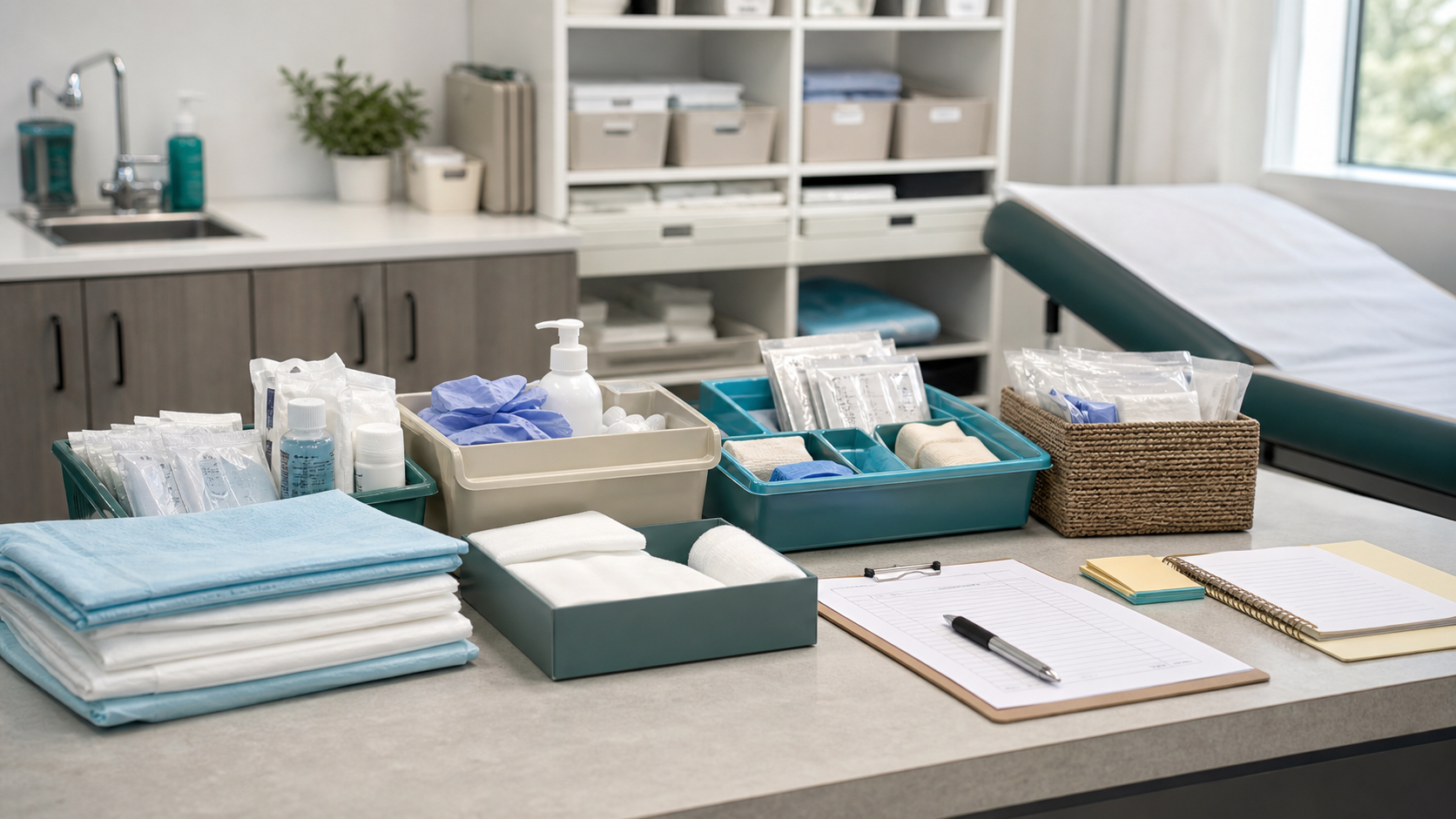
Exam room supplies are a category planning problem
Exam room supply requests often start with a short phrase like "medical exam supplies quote" or "clinic exam room supplies distributor." Those searches are useful, but they are broad. A clinic exam room can touch patient care, infection control, gloves, skin and wound management, sharps safety, and general procedure support in the same daily workflow.
For tribal health clinics, the practical goal is usually not to find a single item. It is to keep routine rooms ready while making procurement review easier. A buyer may need gloves, table paper, disposable drapes, basic patient-care products, skin-prep items, dressings, sharps containers, or other room-ready supplies. The supplier conversation becomes more useful when those needs are grouped by use case and item detail.
It also helps to separate routine replenishment from a one-time setup or catch-up order. A recurring stocking need may depend on usage patterns and pack sizes. A new exam room, outreach clinic, or seasonal surge may need a broader category review. Naming the situation helps the supplier understand whether the request is about continuity, a substitute, or a new supply list.
Common supply groups to organize first
Exam rooms can draw from several sourceable medical-supply categories that are already part of Tribal Innovations' public product scope. The exact product still needs review, but buyers can usually make the first conversation clearer by grouping the request.
- Patient care supplies for everyday treatment and room readiness.
- Gloves and protective items used during routine exams or procedures.
- Infection control items that support room turnover and clean clinical environments.
- Skin and wound management supplies such as dressings, gauze, skin prep, barrier products, tape, and compression-related items.
- Sharps safety products such as containers and related supplies when a room workflow requires them.
- Laboratory-adjacent collection or specimen supplies when an exam-room workflow includes those steps.
This does not mean every item in every category is automatically available. It means the buyer has a safer starting framework for review. Product fit can depend on manufacturer, item number, size, sterile status, material, packaging, unit of measure, and whether the clinic can accept an alternate.
Have a current product category or quote question?
Ask about exam room suppliesDetails that make the request easier to review
A supplier can respond more usefully when the buyer provides enough context to avoid guessing. If the clinic has exact item numbers, include them. If the exact item is unknown, describe the product group and how the room uses it.
Useful exam-room supply details
- Product name, item number, manufacturer number, or a clear description.
- Category, such as gloves, patient care, infection control, skin and wound, sharps, or lab-related supply.
- Size, material, sterile or non-sterile requirement, and packaging.
- Unit of measure, case quantity, and estimated order quantity.
- Whether a brand-specific item is required.
- Whether substitutes or alternate pack sizes can be reviewed.
- Delivery location, timing, and whether the need is recurring or one-time.
These details help prevent mismatches. A glove request may depend on material, size range, latex-free requirements, and box or case quantity. A dressing request may depend on dimensions, absorbency, adhesive, and packaging. A sharps request may depend on container size, mounting preference, or room workflow. Those details are procurement facts, not clinical advice, and they help make the sourcing conversation more concrete.
How to think about substitutions
Substitution rules matter in exam room supply planning because many everyday products look similar from a distance. A buyer should decide which items are exact-match requirements and which can be reviewed for an acceptable alternate.
For exact-match items, include the known item number and explain why the product should not change. For flexible items, describe the acceptable range: size, material, quantity, packaging, and any facility preference. If a substitute needs internal approval, say that up front so the supplier understands the review path.
The goal is not to lower standards. It is to make the supplier conversation clearer. A buyer who can say "same size and material, alternate manufacturer acceptable" gives the supplier a different review path than a buyer who says "this exact item only."
Where Tribal Innovations can fit
Tribal Innovations serves Indian Health Service facilities, tribally operated healthcare programs, and urban Indian health organizations through a Native-owned medical-supply distribution model. Its current public product scope includes categories that often touch exam room supply planning, including patient care, gloves, infection control, skin and wound management, laboratory products, and sharps-related supplies.
The right expectation is category and item review. Availability, pricing, and delivery timing depend on the product details and fulfillment constraints. A good first request includes the supply group, item numbers or descriptions, quantities, timing, and substitution rules. From there, Tribal Innovations can review whether the need fits current sourceable categories and quote support.
For buyers comparing supplier fit, the most useful next step is to gather the item list before reaching out. Then route the request through Products or Contact so the conversation starts with enough detail to be actionable.
Useful links
Next step
Have a product or category need?
Contact Tribal Innovations with the product category, item details if known, estimated quantity, and timing. The team can review fit and talk through the next step.